Web Application
Clinic Appointment Booking Application
A structured appointment platform that simplifies booking, clinic scheduling, and role-based administrative workflows.

Client
Academic Case Study
Year
2026
Project status
Academic Case Study
Industry
Healthcare
Services
Web Development, Web UI/UX Design
Technologies
Next.js, NestJS, TypeScript, Tailwind CSS, PostgreSQL
Case study
Project Overview
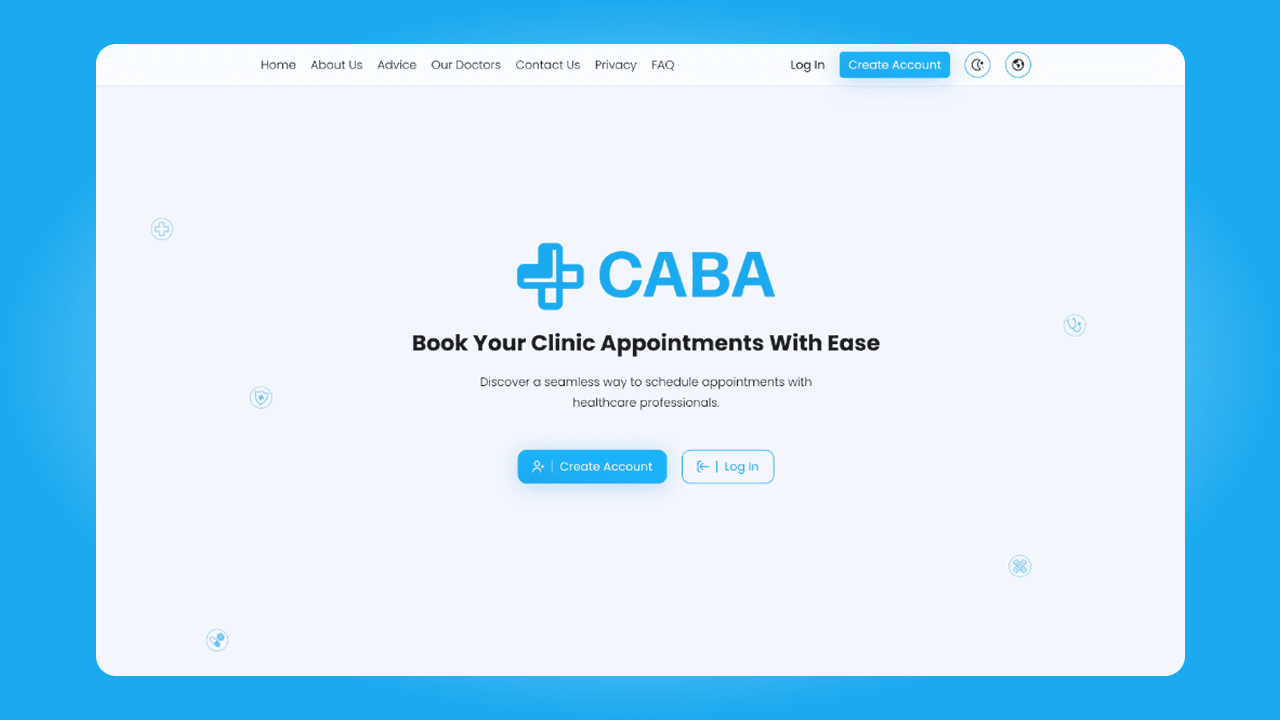
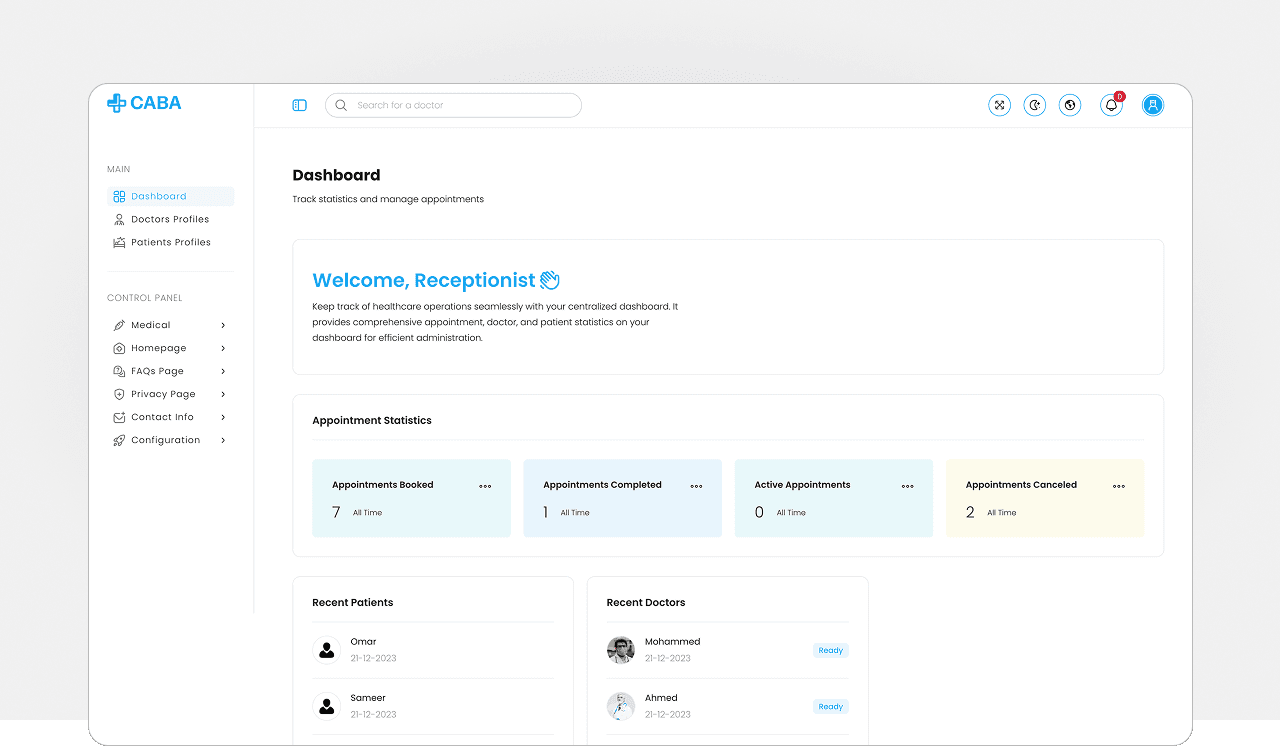
CABA is a responsive clinic appointment application created to improve how patients book appointments and how healthcare professionals manage schedules. It brings patient booking, doctor availability, appointment management, and administrative workflows into one structured system.
Technway contributed to requirements analysis, application structure, user experience, front-end development, back-end architecture, API design, and quality assurance. The project was developed as an academic case study rather than a commercial client project.
The Challenge
Clinic appointment processes often involve disconnected steps, manual confirmation, and a higher risk of incomplete or conflicting bookings. The challenge was to support patients, doctors, and administrators in one system without making the experience complicated.
Goals
Implemented scopeRole-based flows for patients, doctors, and administrative users.Appointment availability and booking states.Responsive interfaces for key booking and management tasks.API and database structure for the academic case study.Out of scopeProduction deployment for a real clinic.Payments, insurance processing, and integrations with medical record systems.Claims of operational or clinical outcomes.
Technway's Role
Requirements analysis
User-flow planning
Responsive UI design
Front-end development
Back-end and API architecture
Database modeling
Testing and documentation
Discovery and Approach
The project began by defining the responsibilities of patients, doctors, and administrative users. Shared workflows were reused where possible, while permissions and available actions changed according to the authenticated role. The interface, application logic, API, and database responsibilities were kept clearly separated.
Design and Technical Solution
The appointment process was structured as a predictable sequence with clear loading, empty, validation, success, and permission states. A TypeScript-based architecture separates front-end and back-end responsibilities while reusable modules reduce duplication across booking and management workflows.
Accessibility
The interface uses semantic structure, visible focus states, keyboard-accessible controls, labeled forms, clear validation feedback, sufficient touch targets, and status messages that do not depend only on color.
Performance
Performance work focused on controlled data fetching, efficient rendering, reusable loading states, and avoiding unnecessary client-side processing. No numerical score is presented without a documented measurement.
Testing and Quality Assurance
The application was reviewed across form validation, API behavior, authentication, authorization, responsive layouts, error states, booking workflows, and role-specific actions.
Results and Key Outcomes
CABA produced a clearer model for clinic appointment management. Patients receive a more predictable booking journey, while clinic users receive role-specific tools. The reusable structure also makes future features easier to add without rebuilding common interaction and validation patterns.
Lessons and Technical Highlights
Key decisionsDefine appointment states and permissions before designing screens.Keep patient and administrative flows separate while reusing shared components.Make errors and unavailable time slots explicit.Treat the project as an academic case study, not a live clinical product.The current case study uses the available application overview image. More interface screenshots and a real booking-flow diagram should be added when exported from the implemented project.