Flagship internal case study
Technway Digital Platform
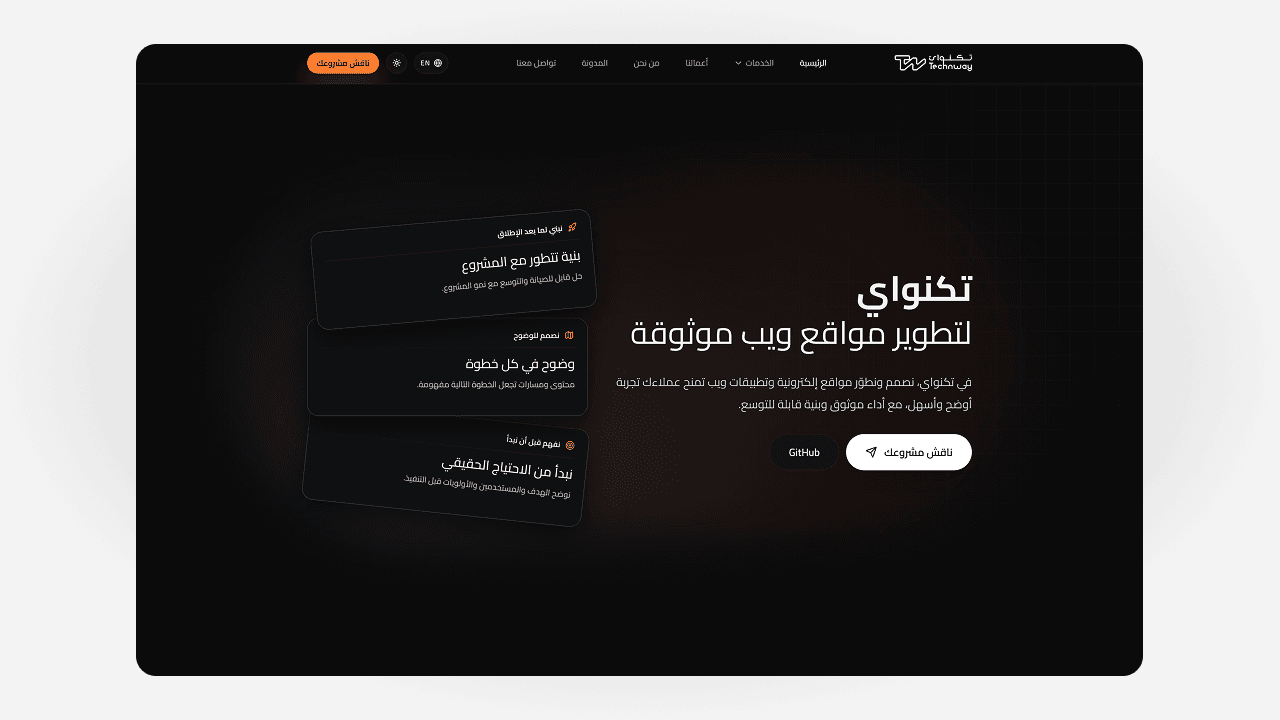
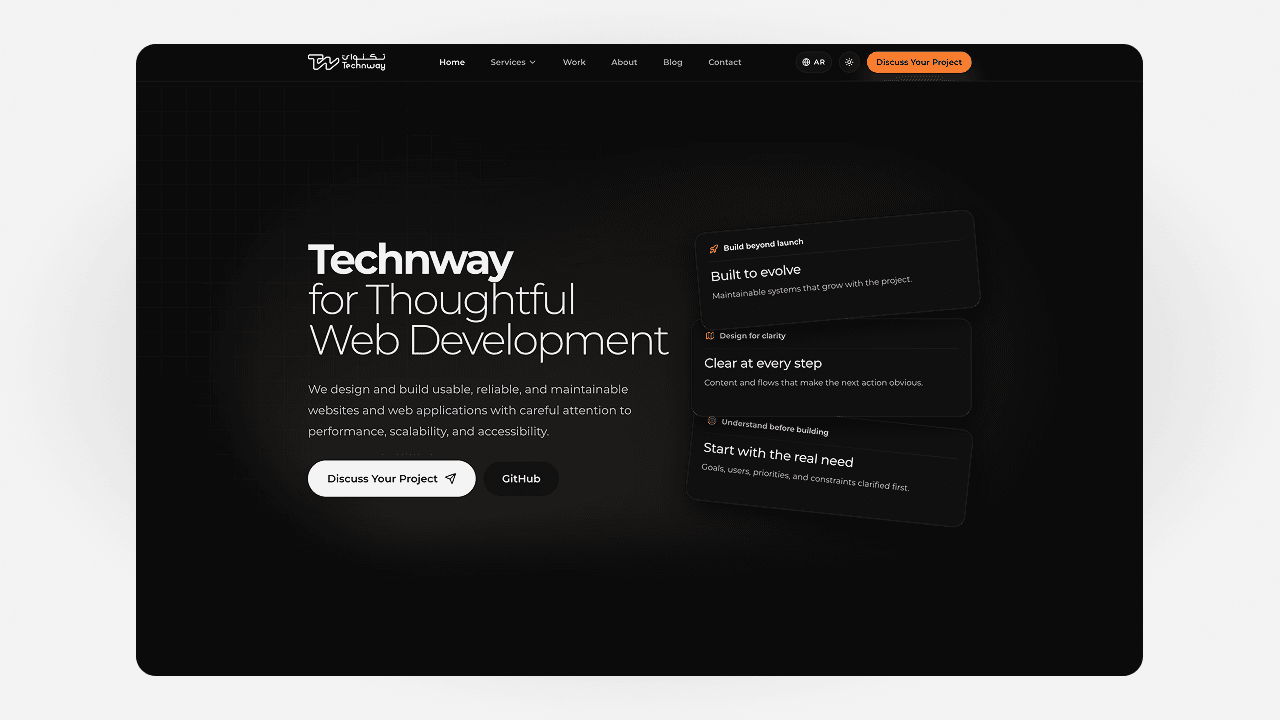
A bilingual corporate website and content platform that combines a carefully designed Next.js experience with a custom headless WordPress editorial system.


What the platform demonstrates
More than a visual redesign
Technway is a live bilingual product, an editorial system, and an operational codebase. These capabilities are implemented in the current platform.
Complete bilingual experience
Equivalent routes, RTL behavior, language-aware typography, and persistent preferences.
Structured headless CMS
WordPress manages content while Next.js controls presentation and interaction.
Reusable interface system
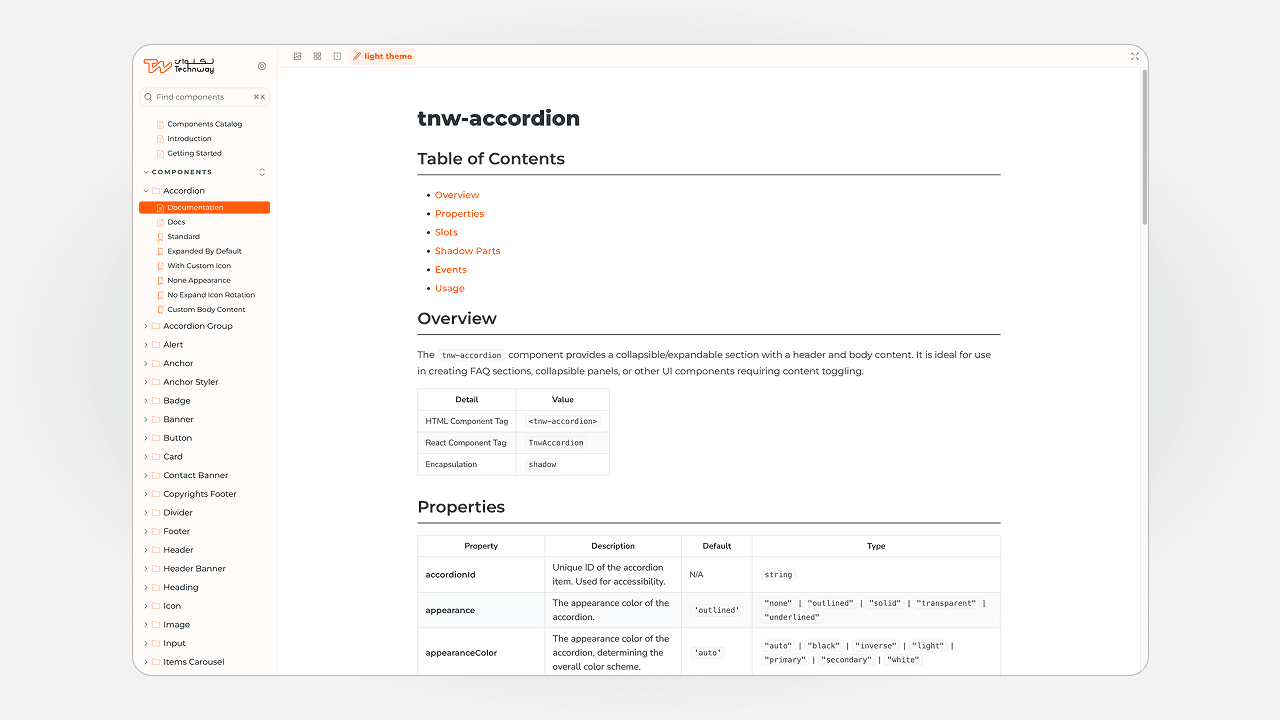
Shared components, themes, responsive states, and a dedicated showcase.
Accessible interaction
Keyboard support, visible focus, semantic structure, reduced motion, and clear feedback.
Editorial safeguards
Previewed imports, scoped Safe and Force modes, bilingual exports, and protected settings.
Inquiry workflows
Validated forms, secure WordPress storage, and production email readiness.
Search-ready foundations
Canonical routes, language alternates, structured metadata, sitemaps, and page SEO fields.
Production operations
Health checks, structured logs, route validation, backups, monitoring hooks, and recovery planning.
From business need to working platform
The challenge, the goals, and our responsibility
The Challenge
Technway needed one credible platform that could explain the business clearly and support real day-to-day publishing.
- Present services, work, people, and articles as one coherent experience
- Serve English and Arabic audiences with equal care
- Avoid a fragile marketing site that becomes difficult to maintain
Goals
The platform was planned around clarity for visitors, practical control for editors, and stable foundations for future growth.
- Make content easy to update without changing frontend code
- Show evidence honestly without unsupported commercial claims
- Create reusable patterns for new services, projects, and pages
Technway's Role
The work connected business analysis, content structure, interface design, engineering, testing, and production operations.
- Information architecture and bilingual content planning
- Design-system direction and frontend implementation
- CMS architecture, validation, deployment, and maintenance
One platform, two complete experiences
Arabic was designed as a product language, not added as a translation layer
Both versions share one content architecture, with deliberate decisions for direction, typography, spacing, navigation, metadata, and equivalent-route switching.


Headless and full-stack architecture
A headless platform with clear responsibilities across every layer
The platform separates presentation, content, data, and operations without disconnecting them. Each layer has a clear responsibility and a tested connection to the next.
The public application and presentation layer.
- Server-rendered bilingual routes and equivalent navigation
- Reusable responsive UI, forms, accessibility, metadata, preferences, and error states
The tested boundary between content and presentation.
- Typed content mapping and translation relationships
- Media fallbacks, equivalent routes, query checks, and schema validation
The editorial and operational workspace.
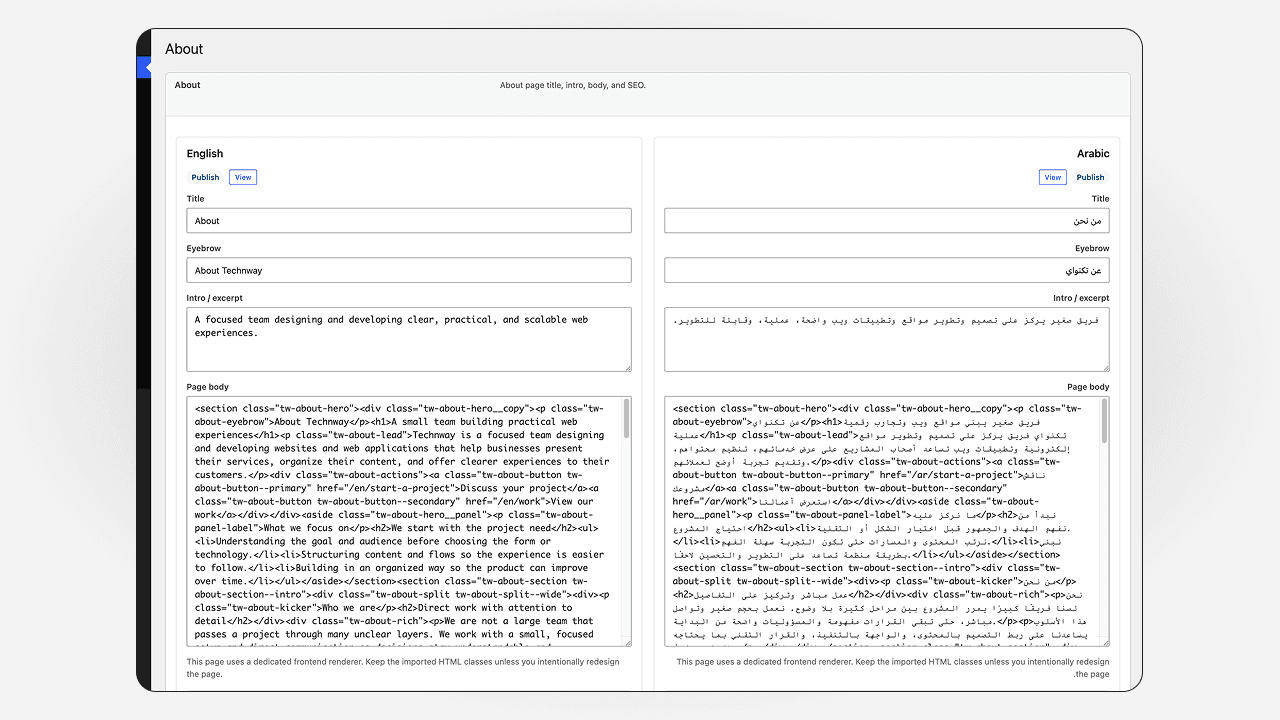
- Structured content, relationships, and custom administration
- Homepage composition, inquiries, previewed imports, and bilingual exports
Persistent records and assets behind the CMS.
- Content, settings, inquiries, media, and operational records
- Backups, recovery-ready exports, and environment-safe configuration
Delivery and protection
Delivery is treated as part of the system, not a final upload. Docker supports local development, Vercel serves the frontend, and Cloudflare protects public and administrative surfaces.
- Separate frontend, CMS, staging, and production concerns
- Health checks, structured logs, monitoring hooks, backups, and recovery planning
- Credentials and environment-specific settings kept outside reusable content
The editorial system
Structured editing without design drift
The custom administration manages bilingual pages, homepage sections, projects, people, inquiries, and controlled content movement from one focused workspace.

What editors control
Content and relationships remain editable, while layout, interaction, accessibility, and responsive behavior stay in the frontend.
- Structured bilingual records and translation links
- Homepage and reusable-section controls
- Previewed scoped imports and reusable EN and AR exports
- Secrets and environment settings kept separate from content
Quality beyond the interface
Quality continues after launch
Focused checks and operational safeguards keep the platform maintainable and dependable.
Accessibility
Semantics, keyboard support, visible focus, RTL review, and reduced motion.
Performance
Server rendering, optimized media, controlled JavaScript, and cache-aware data access.
Testing
Linting, type checks, GraphQL validation, route audits, and form tests.
Resilience
Access controls, health checks, logs, backups, and recovery tooling.
The outcome
A maintained platform that reflects how Technway works
Technway now runs on one bilingual platform that connects the public experience, structured content, inquiries, and operations. It remains an active internal product and evolves with the business.
What the work reinforced
- Content, experience, and architecture are strongest when planned together.
- Arabic quality needs dedicated design, implementation, and review.
- Launch begins the work of maintenance, monitoring, and controlled publishing.
What this means for clients
More than a brochure website
The same approach supports organizations that need structured content, bilingual delivery, dependable workflows, and a platform that can keep evolving.